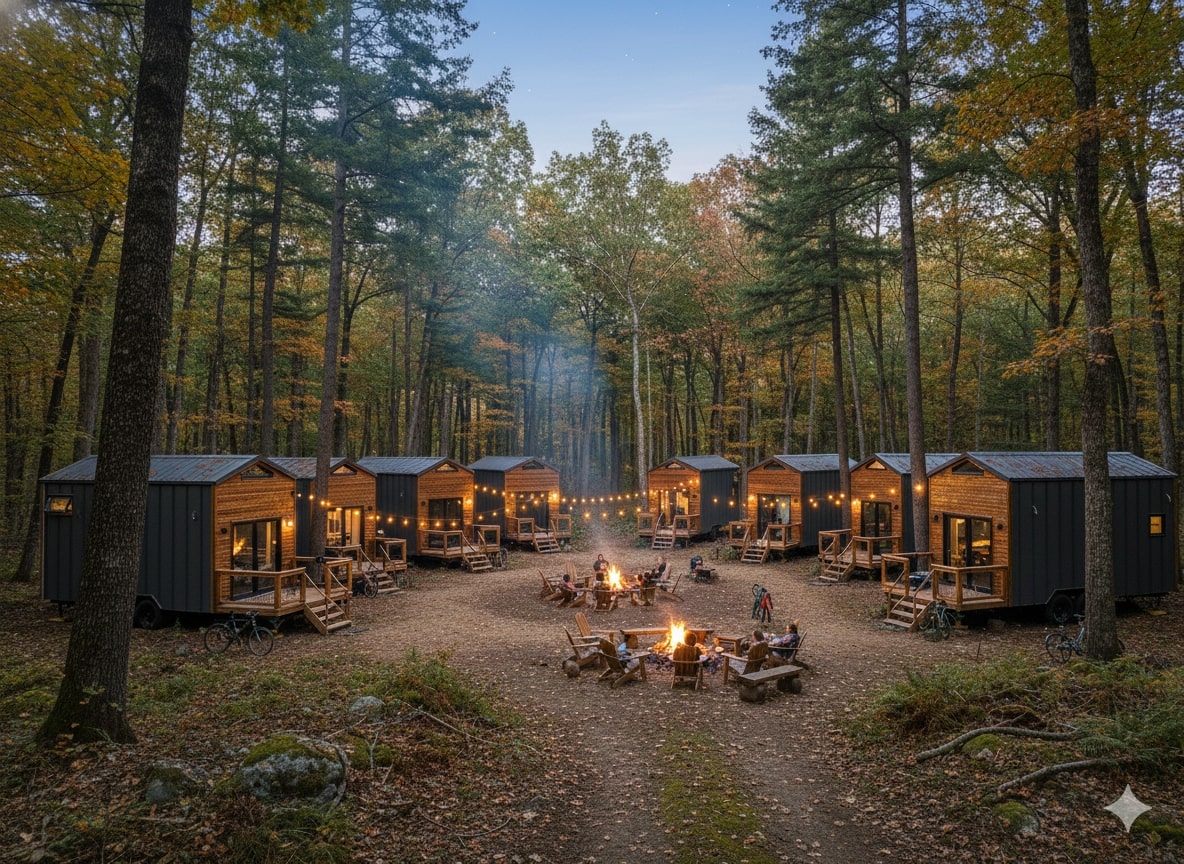
Smart Tiny Home Revolution: How Off-Grid Solar & Automated Cabins are Shaping Modern Living
Table of Contents:
- Smart Tiny Home Revolution
- Understanding Smart Tiny Homes
- The Role of Off-Grid Solar in Smart Tiny Homes
- Automated Cabin Features and Their Commercial Value
- Market Trends and Commercial Potential
- Conclusion
Smart Tiny Home Revolution
In an era where housing costs continue to soar and environmental consciousness shapes our decisions, smart tiny homes are emerging as a revolutionary solution that’s redefining modern living. These compact dwellings, typically under 600 square feet, are far from simple downsized houses – they represent a sophisticated fusion of advanced technology, sustainable design, and luxury features that’s capturing the imagination of homeowners and investors alike. For a closer look at premium designs in compact spaces, explore our insights on luxury tiny living.
At the heart of this revolution lies the integration of off-grid solar technology, transforming these diminutive dwellings into self-sufficient havens through cutting-edge solar panels, battery systems, and innovative water management solutions. This marriage of sustainability and independence has created a new paradigm in housing, where size constraints become opportunities for technological innovation.
The automated cabin features of these homes further elevate the living experience, incorporating smart glass, intelligent climate control systems, and IoT connectivity that rival the convenience of traditional luxury homes. These technological advancements have not only enhanced the appeal of tiny living but have also opened up exciting commercial possibilities for investors seeking unique opportunities in the real estate market. For insights on how these commercial opportunities translate into real investment value, check out our discussion on tiny house resort ROI. In addition, learn about cutting-edge cabin innovations with our review of the Magic Box Apple Cabin.
Understanding Smart Tiny Homes
The concept of smart tiny homes extends far beyond mere miniaturization. These ingenious dwellings showcase remarkable design innovations that maximize every square inch of available space. Open-concept layouts flow seamlessly from multi-functional living areas to cleverly concealed storage solutions, while lofted sleeping areas create vertical space utilization that would make any architect proud. The integration of transformable furniture – from murphy beds that become desks to dining tables that collapse into wall art – demonstrates the incredible versatility these homes offer.
Sustainability stands as a cornerstone of smart tiny home design, with features that would make any environmentalist smile. High-efficiency HVAC systems work in concert with advanced insulation techniques to maintain comfortable temperatures while minimizing energy consumption. Greywater recycling systems and living green roofs don’t just reduce environmental impact – they create opportunities for self-sufficiency through integrated planter walls that can provide fresh produce year-round. Learn more about eco-friendly building innovations and sustainable design in our post on Sustainable Tiny Homes 2026.
The technological integration in these homes creates an atmosphere of sophisticated minimalism. Wall-mounted screens double as artwork when not in use, while concealed charging stations and voice-activated smart glass ensure that modern conveniences don’t clutter the carefully designed spaces. The beauty of these smart systems lies in their ability to enhance daily living while maintaining the clean, uncluttered aesthetic that makes tiny homes so appealing.
The Role of Off-Grid Solar in Smart Tiny Homes
Off-grid solar technology represents a quantum leap in sustainable living, freeing tiny home owners from the tether of traditional utilities. The typical system, featuring 1.5-3kW rooftop panels or innovative transparent window panels, works in harmony with advanced lithium-ion battery banks to ensure consistent power availability regardless of weather conditions.
The financial benefits of these systems are compelling. Homeowners can expect to recoup their $15,000-$30,000 investment through eliminated utility bills, while simultaneously reducing their environmental impact by up to 90% in terms of material waste and carbon footprint. This combination of economic and environmental benefits makes off-grid solar systems particularly attractive for those seeking true independence in remote locations or mobile living scenarios.
Smart interfaces transform energy management from a chore into an effortless experience. Real-time monitoring of energy production and consumption allows systems to automatically adjust to usage patterns, ensuring that essential functions like HVAC, water generation, and appliance operation remain reliable without requiring connection to traditional power grids.
Automated Cabin Features and Their Commercial Value
The automation technologies integrated into modern tiny homes represent a paradigm shift in compact living. Smart climate control systems respond intuitively to weather conditions, while app-controlled smart glass transitions from transparent to opaque at the touch of a button. These features, combined with automated lighting systems and deployable screens, create living spaces that adapt to their owners’ needs throughout the day.
The commercial implications of these automated features are substantial. High-value rental opportunities abound, particularly in the vacation home market where luxury amenities command premium rates. Remote workers increasingly seek these tech-enabled spaces as private offices or temporary residences, appreciating the combination of professional functionality and sophisticated comfort.
The investment potential becomes even more attractive when considering the low maintenance requirements and high rental yields these properties can generate. Despite their limited square footage, automated cabins can transform into versatile spaces – from luxury spa retreats to professional workstations – providing multiple revenue streams for savvy investors.
Market Trends and Commercial Potential
The smart tiny home market is experiencing remarkable growth, with a projected annual increase of 7.1% driven by innovations in technology and shifting consumer preferences. This growth reflects a broader societal movement toward sustainable, efficient living solutions that don’t compromise on comfort or style.
Different market segments are finding unique value in these homes. Eco-conscious buyers appreciate the minimal environmental impact, while digital nomads value the mobility and technical infrastructure. Retirees discover that these homes offer luxury without the burden of maintaining large spaces, and families find an affordable entry point into homeownership without sacrificing modern amenities.
The investment landscape is equally promising, with luxury models commanding prices between $150,000 and $250,000 while offering significant returns through various revenue streams. The reduced construction costs – up to 90% less material than traditional homes – combined with the potential for high rental yields make these properties increasingly attractive to investors seeking innovative real estate opportunities.
Conclusion
The convergence of smart tiny homes, off-grid solar technology, and automated features represents more than just a housing trend – it’s a glimpse into the future of sustainable, efficient living. These innovations are creating new possibilities for homeowners and investors alike, offering solutions that address both environmental concerns and modern lifestyle demands.
As we look to the future, the growing market demand and expanding technological capabilities suggest that smart tiny homes will play an increasingly important role in shaping how we think about housing. Whether you’re considering a personal investment in sustainable living or exploring commercial opportunities in this dynamic market, the time has never been better to embrace the smart tiny home revolution. The combination of environmental responsibility, technological sophistication, and financial viability makes these homes not just a trend, but a transformative force in modern living.