Dealer & Partner Program

Sell Certified Tiny Homes.
Factory Direct.

Magic Box is one of the only Chinese-manufactured tiny home brands with genuine third-party ANSI 119.5 (NOAH+) certification — giving our dealers access to glamping resorts, RV parks, and ADU markets that other suppliers simply cannot enter.

NOAH+ / ANSI 119.5 Certification In ProgressThird-party inspection on every unit — accepted at glamping resorts, RV parks, and by lenders & insurers across the USA
🇺🇸
United StatesANSI 119.5 Certified
🇦🇺
AustraliaNCC Compliant Supply
🇳🇿
New ZealandPS1 Engineering
🇨🇦
CanadaCSA Z240 In Progress
🏕️
GlampingCluster Pricing Available
🏗️
ADU & DevelopmentEngineering Package Included

Who We Work With

Three Ways to Partner

Whether you operate a glamping resort, run a dealership, or develop property — there's a Magic Box partnership model designed for your business.

🏪

Regional Dealers & Distributors

Stock and sell Magic Box products in your region with exclusive territory options. Ideal for home improvement retailers, modular home dealers, and outdoor living specialists.

  • Exclusive regional territory options
  • Full product training & sales materials
  • Marketing co-op support
  • Display unit program available
  • Dedicated account manager
Apply as Dealer
🏗️

Developers & Builders

Source factory-direct for ADU projects, housing developments, and construction sites. We supply engineering documentation packages to simplify permitting in all target markets.

  • Engineering package included per model
  • Kit homes — no national certification needed
  • Container homes with IBC 3115 PE-ready plans
  • Volume pricing from 3+ units
  • AU & NZ structural engineering support
Start a Conversation

Why Magic Box

The Competitive Advantages Your Customers Will Ask About

Most Chinese prefab exporters offer price. We offer price plus the certifications, documentation, and support that let you sell into markets your competitors can't access.

01

ANSI 119.5 / NOAH+ Certification

One of the only Chinese manufacturers with genuine third-party ANSI 119.5 certification — not self-declared compliance. This opens glamping resorts, RV parks, and lender-backed sales that remain closed to uncertified competitors.

02

Engineering Documentation Included

Every container home and kit home comes with a permit-ready engineering package. Your clients spend less time and money on approvals — that's a genuine selling point you can quote.

03

Factory-Direct Pricing

30+ unit monthly capacity from our Yantai factory means competitive pricing without distributor markups. Your dealer margin is built in from the start, not squeezed out.

04

Founder-Led Quality Control

Our founder is a former Texas glamping operator who built and ran her own site. She knows what fails in the field. Every product decision reflects real-world operator experience, not just factory defaults.

05

Multi-Market Certification Roadmap

We are actively pursuing certification across US, AU, NZ, and CA — giving our dealers a long-term supply partner with documented compliance pathways in every target market.

Our Certification Status

We publish our certification status honestly. We do not claim certifications we do not hold.

ANSI 119.5 / NOAH+ — In ProgressThird-party video inspection per unit. Opens US glamping & RV park markets.
🔄
ISO 9001 — In ProgressQuality management system certification with CNAS-accredited body.
🔄
CSA Z240 (Canada) — ApplyingCanadian park model standard. Timeline: 6–12 months.
📋
NCC (Australia) — Engineering SupportAU structural engineering partner engaged for AS 1170 compliance.
< 5

Chinese THOW manufacturers with genuine third-party ANSI certification. Your customers cannot easily find an alternative.

What You'll Sell

Five Product Lines, One Factory Partner

From ANSI-certified tiny homes on wheels to permit-friendly backyard studios — a full range of products for different buyer types and markets.

🏠
ANSI 119.5 Certified

MagicSlide — Expandable THOW

Tiny house on wheels with slide-out expansion. NOAH+ certified. Opens glamping resort, RV park, and ADU markets.

From$35,000
On wheelsVIN registeredRV park compliant
🌿
Highest Growth

MagicStudio — Backyard Studio

Under 120 sqft — no building permit required in most US jurisdictions. Solar-capable. Perfect for WFH professionals, Airbnb hosts, and creatives.

From$9,900
No permit neededSolar ready3-day install
📦
Includes Eng. Package

Container Home — 20ft & 40ft

Modified shipping container homes with PE-ready engineering package included. IBC Section 3115 compliant documentation for smoother permitting.

From$28,000
Eng. package incl.ISO data plate20ft or 40ft
🔧
Easiest to Permit

MagicNest — DIY Kit Home

Light steel panel kit shipped flat-pack, assembled on-site. No national certification needed anywhere. Ideal for AU and NZ markets where housing costs are extreme.

From$18,000
No cert neededShips flat-packAU/NZ ready
🏡
Premium

MagicPod — Modular Home

Fully furnished modular dwelling. Best suited to AU and NZ markets where NCC applies nationally. Guest house, granny flat, and ADU applications.

From$32,000
Fully furnishedAU/NZ focusedADU ready

Active Markets

We Support Dealers in Four Countries

Each market has different certification requirements. We handle the compliance complexity so you can focus on selling.

🇺🇸

United States

ANSI 119.5 certified opens glamping resorts, RV parks, and lender-backed sales. Backyard studios under 120sqft require no permit in most jurisdictions.

  • THOW with NOAH+ certification
  • Backyard studio — no permit needed
  • Container homes with IBC 3115 docs
  • Focus: TX, FL, CA glamping operators
🇦🇺

Australia

No tariffs on Chinese products. NCC applies nationally. ADU laws relaxed in 2025. Strong demand driven by housing affordability crisis.

  • Kit homes — NCC via local builder
  • Container homes — NCC + AU engineer
  • Modular homes — NCC national std.
  • Focus: QLD, NSW, VIC ADU market
🇳🇿

New Zealand

Same shipping route as Australia. Local builds cost NZD $154,000–$177,000+. Almost no certified Chinese competition. Significant price gap opportunity for dealers.

  • PS1 structural engineering support
  • Kit homes — lowest entry barrier
  • Dealer partner: Dracon International
  • Focus: Auckland, Wellington, Christchurch
🇨🇦

Canada

CSA Z240 certification application in progress (6–12 months). Container homes are simpler — local engineering only, no CSA needed. Significant opportunity for forward-thinking dealers.

  • CSA Z240 in progress for THOWs
  • Container homes — local eng. only
  • Kit homes — NBC via local builder
  • Focus: BC, Ontario, Alberta markets

The Numbers That Matter

Your Clients' ROI Story

For glamping operators, the math on a Magic Box cluster purchase is exceptionally compelling. Here is what you can show a resort operator when presenting a 10-unit proposal.

$150–$250

Average nightly glamping rate per cabin in the US (2025)

70%

Average occupancy rate at established glamping resorts

<6 mo

Typical payback period for a 10-unit glamping cluster at average rates

15%

US glamping market CAGR — growing to $1.3B by 2029

10-Unit Glamping Cluster — Annual Revenue Model

Based on MagicSlide THOW at $35,000/unit with cluster pricing

Unit cost (10 units × $35K, –15% cluster)$297,500
Nightly rate (conservative $150)$150 / night
Occupancy (70% × 365 days × 10 units)2,555 nights
Gross annual revenue$383,250
Estimated payback period< 12 months
At $250/night$638,750 / year

How It Works

From Application to First Sale

We have streamlined the onboarding process so you can start selling within weeks, not months.

1

Apply & Qualify

Complete the form below. Our team reviews your market, customer base, and goals. Response within 48 hours.

2

Product & Pricing Briefing

Video call with our team — full product catalogue, wholesale pricing, and market-specific compliance overview.

3

Agreement & First Order

Sign dealer agreement. Place first order. We provide all sales collateral, spec sheets, and marketing materials.

4

Ongoing Support

Dedicated account manager. Engineering package support per project. Regular product updates as new lines launch.

Common Questions

Dealer FAQ

What is the minimum order quantity?

For dealer accounts, the minimum is typically 1 unit to start, with volume pricing available from 3+ units and cluster pricing (15% off) from 5+ units. Glamping operators with a specific site project can discuss bespoke terms.

How does the ANSI 119.5 certification work?

We are completing NOAH+ certification, which covers both ANSI 119.5 and IRC dwelling codes. Every unit undergoes a third-party video inspection during manufacturing. Each certified unit receives a NOAH seal and digitised inspection record — accepted by glamping resorts, RV parks, and insurance underwriters across the US.

What support do I get for permitting in my market?

Container home and kit home models come with a permit-ready engineering package that your clients can take directly to their local PE engineer. For Australian and New Zealand dealers, we have structural engineering partners who provide compliant documentation per model.

What is the lead time from order to delivery?

Standard production lead time is 45–75 days from confirmed order. Shipping transit adds 25–35 days to the US, or 18–28 days to Australia and New Zealand. We work with established freight partners in all target markets.

Can I see a unit before committing?

We can arrange virtual factory tours and have reference customers in multiple markets who are open to site visits. Contact us and we will facilitate introductions appropriate to your target market and product interest.

Are your products suitable for the Australian and NZ market without modification?

Our Australia-bound units are specified for AS 1170 wind loads, 100mm PU insulation panels (NatHERS compliant), and shipped with timber heat-treatment (HT) certificates for AQIS biosecurity. Final electrical and plumbing connections are completed by local licensed trades on-site.

Do you offer exclusive territory arrangements?

Yes, for committed regional dealers who meet agreed volume thresholds, exclusive territory arrangements are available in both the US (by state) and internationally (by country or region). Discuss during your initial briefing call.

What products require no building permit?

Our MagicStudio backyard studio, at under 120 sqft with no permanent plumbing or grid-tied electrical, requires no building permit in most US jurisdictions. Always recommend that clients verify local rules — regulations vary by municipality and HOA.

Apply Now

Start Your Dealership Application

Complete the form and our team will respond within 48 hours with a company profile, product catalogue, and wholesale pricing sheet.

What you'll receive

After submitting your application, you'll get:

  • 📋
    Full product catalogue with wholesale pricing across all five product lines
  • 📊
    Market-specific compliance overview for your country (US, AU, NZ, or CA)
  • 🏕️
    Glamping ROI calculator and sample project financials (for hospitality applicants)
  • 📐
    Sample engineering package for container home and kit home products
  • 📞
    Scheduled call with our founder — former Texas glamping operator and ex-Amazon SDE

Dealer Enquiry

Due to high volume, our team responds within 48 hours. For urgent enquiries email sales@magicboxtinyhouse.com with subject: Dealership.

The more detail you provide, the more tailored our response will be.

By submitting you agree to our Privacy Policy. We do not sell or share your information.

tiny house humilityThe Ultimate Guide to Tiny House Humidity and Tiny House Ventilation: Why Aluminum Tiny Houses Excel
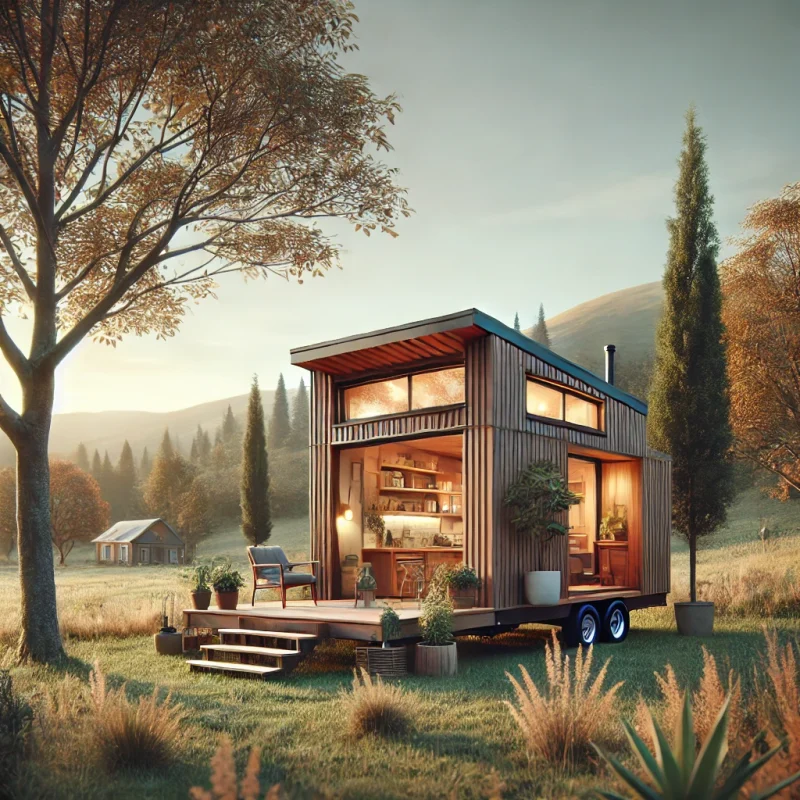
Living in a tiny house is a dream for many, offering simplicity, mobility, and a lower environmental footprint. However, creating a healthy and comfortable living environment in a compact space requires careful attention to two critical factors: tiny house humility (often a common misspelling of ‘humidity’) and tiny house ventilation. Properly managing moisture and air flow is not just a detail—it’s essential for the structural integrity of your home and your personal well-being.

For builders and homeowners, the choice of materials is a fundamental decision that dramatically impacts how a home handles these challenges. While traditional wooden tiny houses are common, they present significant hurdles in moisture management. This is where modern aluminum tiny houses offer a superior, durable, and healthier alternative.

Why Tiny House Humidity Control is a Big Deal in a Tiny Space

Tiny house humility (humidity control) is crucial because the consequences of excess moisture are amplified in a small area. Every breath, shower, and cooked meal releases water vapor into the air. Without effective management, this leads to:

  • Condensation on windows and cold surfaces
  • Growth of mold and mildew, which can cause health issues
  • Musty odors and a damp feeling
  • Long-term damage to walls, insulation, and structural components

Wood, a hygroscopic material, naturally absorbs and releases moisture from the air. While this can be beneficial in some contexts, in the tightly sealed envelope of a tiny house, it can lead to problems like warping, rotting, and providing a food source for mold. This means wooden tiny houses require exceptionally diligent and continuous ventilation strategies to stay dry.

How Aluminum Tiny Houses Revolutionize Moisture Management

Our tiny houses are constructed with high-quality aluminum extrusions, a material that inherently provides a powerful defense against humidity-related issues.

  • Moisture-Resistant: Unlike wood, aluminum does not absorb water. It will not warp, rot, or swell when exposed to moisture, effectively eliminating the primary causes of water damage in tiny homes.
  • No Organic Material for Mold: Mold requires organic material to grow. Aluminum provides no food source, making it much more difficult for mold to establish itself, even if humidity levels temporarily rise.
  • Durable and Stable: Aluminum’s structural integrity is not compromised by temperature changes or moisture exposure. This ensures your tiny house remains strong, square, and safe for decades.

In essence, an aluminum tiny house provides a robust, inert barrier against moisture, giving you a significant head start in the battle against high humidity.

Speaking of innovative design, this core philosophy is what drives us at MagicBox Tiny Homes. We specialize in crafting precision-engineered tiny houses built with a strong aluminum frame, specifically designed to tackle the challenges of modern tiny living. To see how we put these principles into practice across our various models, click here to explore our available floor plans.

Mastering Tiny House Ventilation for a Perfect Climate

Excellent tiny house ventilation is the active partner to your home’s passive moisture resistance. It is the system that continuously exchanges stale, humid air for fresh, dry air. A well-ventilated aluminum tiny house is virtually unbeatable for climate control.

Here are the key components of an effective tiny house ventilation strategy:

  1. Cross-Ventilation: Strategically placed windows and roof vents on opposite sides of the house allow fresh air to flow naturally through the space, carrying moisture out with it.
  2. Mechanical Ventilation: This is non-negotiable for a healthy tiny house, especially in humid climates or during winter.
    • Kitchen Exhaust Fan: A vented range hood is essential to remove steam, grease, and odors directly at the source while cooking.
    • Bathroom Exhaust Fan: This is critical for removing humid air after showers. It should be vented directly to the outside.
  3. Climate Control Systems:
    • Air Conditioning (AC): Modern AC units do more than cool air; they are excellent dehumidifiers, actively removing moisture as they circulate air.
    • Energy Recovery Ventilator (ERV): For the ultimate in efficiency, an ERV system exchanges the indoor humidity and stale air with fresh outdoor air while recovering energy, minimizing heat loss or gain. This provides constant, controlled ventilation without wasting energy.

Key Advantages of an Aluminum Tiny House for Ventilation:

  • Airtight Sealing: Aluminum framing allows for incredibly precise and airtight construction. This might seem counterintuitive, but it’s actually a benefit. An airtight structure gives you, the homeowner, complete control over the ventilation. You are not at the mercy of random drafts and air leaks; instead, you can use efficient mechanical systems to provide precise and filtered air exchange exactly when and where you need it.
  • No Moisture Trapping: The non-absorbent nature of aluminum ensures that any moisture in the air remains in the air until it is vented out by your systems. It will not be secretly absorbed into the walls only to cause problems later, a common issue in wooden structures.

Conclusion: A Dry, Healthy, and Durable Home

Managing tiny house humility and implementing robust tiny house ventilation are the pillars of a comfortable and long-lasting tiny home. While all tiny houses require a good ventilation plan, choosing an aluminum tiny house provides a foundational advantage.

You are starting with a material that is immune to the most destructive effects of moisture. When you combine the inherent strength and resistance of an aluminum frame with a smart, multi-layered ventilation strategy, you create a living space that is not only incredibly durable but also healthier, more comfortable, and designed to stand the test of time. At MagicBox Tiny Homes, we’ve built this principle into the foundation of our designs. Choose aluminum—build with confidence and breathe easy. Click here to select your model and begin your journey.