

Tiny Houses for Sale in Florida: Hurricane-Ready Prefab & ADU Options (2026)
Hurricane-rated builds, humidity- and termite-proof aluminium frames, county-by-county ADU rules, and the tiny house models that actually survive a Florida summer.
Buying a tiny house in Florida means making one decision differently than buyers in any other state: you have to plan for hurricanes, salt air, and termites from day one. Skip that step and your dream cabin becomes a $40,000 lesson in why wood frames don’t belong on the Gulf Coast.
The good news is that Florida is one of the most tiny-house-friendly markets in the country once you build for the climate. The state has booming Airbnb demand, a serious housing affordability gap, and growing county-level support for ADUs in Miami-Dade, Broward, Orange, and Hillsborough. You can put a properly built tiny house on a Florida lot legally, profitably, and — done right — with confidence that it’ll still be standing after a Category 3.
This guide covers the four things every Florida buyer needs to know: county-level laws, hurricane-readiness, why aluminium frames genuinely outperform wood in Florida’s climate, and which Magic Box models are built for the state. According to NOAA hurricane climatology data, Florida sees roughly 40% of all US hurricane landfalls — the build spec is not optional.
Florida’s climate is brutal on the wrong materials. Aluminium frames, hurricane-rated anchoring, and proper ANSI/ASCE 7 wind certification turn a Florida tiny house from a liability into a 30-year asset.
MARKET OVERVIEW
Florida’s Tiny House Market: Tourism + Retirement + Housing Affordability
Three demand drivers stack in Florida like nowhere else: 140+ million annual tourists fuel Airbnb and glamping demand, an aging population creates ADU-as-granny-flat demand, and a brutal housing affordability gap (median single-family home over $415,000 statewide in early 2026) pushes first-time buyers toward tiny homes as a path to ownership.
For investors, the math is unusually clean. Coastal counties — Pinellas, Lee, Volusia, Monroe — routinely deliver 12–18% gross annual yields on a properly placed tiny house Florida rental. Inland markets near Orlando theme parks add a third revenue layer with year-round occupancy rather than seasonal swings.
For families and retirees, a backyard tiny house in Florida is increasingly a legitimate ADU play. Florida’s 2023 House Bill 1647 expanded statewide ADU allowances, and several large counties followed with permissive ordinances. Pair that with Florida’s no-income-tax appeal and you have an unusually friendly market — if your unit is built to FL spec.
Three audiences dominate: Airbnb investors in coastal/tourist markets, retirees adding ADUs for family or income, and first-time buyers escaping the $415K median home price. Magic Box ships factory-direct to all 67 Florida counties.
COUNTY-BY-COUNTY
Florida Tiny House Laws by County
Florida is a county-rules state — there is no single statewide tiny house code. What’s legal in Orange County may need a variance in Broward. Here are the four largest counties’ current positions for tiny house placements (always verify with your local planning department before ordering).
| County | ADU Allowed | Min. Dwelling Size | THOW Friendly? | Notes |
|---|---|---|---|---|
| Miami-Dade | Yes (most R-1) | ~375 sq ft | RV park only | Strong ADU push since 2024 |
| Broward | Limited | Varies by city | Restricted | City overlays apply (Fort Lauderdale, Hollywood) |
| Orange (Orlando) | Yes | ~400 sq ft | Selective | Friendly to Airbnb-zoned ADUs |
| Hillsborough (Tampa) | Yes (most R-zones) | ~375 sq ft | Yes in unincorporated | Most permissive of the big four |
For broader context on ADU classification across the US, see our Florida ADU options guide, which walks through the certification → zone → permit pathway in detail. Florida is also covered in our location hub for all tiny house destinations.
If your dream is coastal but Broward is blocking you, check the unincorporated parts of Hillsborough or Volusia. Lot prices are 30–50% lower than Miami-Dade, ADU rules are friendlier, and you’re still 90 minutes from a beach.
BUILD SPEC
Hurricane Resistance: What to Look for in a Florida Tiny House
This is the single most important section of this guide. A tiny house Florida buyers should consider has to clear specific engineering bars — not marketing language about being “sturdy.”
The Florida Building Code adopts ASCE 7 wind-load standards. In most of the state you need a structure rated for 140 mph wind loads; in the High-Velocity Hurricane Zone (Miami-Dade and Broward) the bar jumps to 175 mph with debris-impact testing. A hurricane resistant tiny house should ship with documented wind ratings, not vague claims.
Anchoring matters as much as the frame. A ground-anchored unit on engineered tie-downs, a concrete-pier foundation with hurricane straps, or a steel chassis tied into ground anchors all qualify. A tiny house simply sitting on cinder blocks does not. ANSI A119.5 certification (which all Magic Box THOWs carry) ensures the chassis-to-frame connection is engineered to RV industry standards for wind and road load.
Buying an out-of-state “tiny house” with no wind rating and assuming hurricane straps at delivery will fix it. They won’t — the entire structure has to be engineered for the load. Choose Florida-spec from day one.
MATERIAL SCIENCE
Why Aluminium Frame Outperforms Wood Frame in Florida
If you build with wood in Florida you are signing up to fight three enemies for the life of the structure: humidity-driven rot, subterranean and Formosan termites, and salt-air corrosion of every metal fastener. Each one is solvable with maintenance — but the maintenance never stops.
Magic Box’s 6063 aluminium structural frame eliminates all three. Aluminium does not rot, does not feed termites, and forms its own passive oxide layer that resists chloride corrosion (the killer in coastal climates). It is also roughly 65% lighter than equivalent steel framing, which makes delivery to constrained Florida lots — think narrow beachside roads — dramatically easier. The technical case is detailed in our aluminium frame anti-corrosion benefits deep-dive.
There is no US competitor offering factory-direct panelised aluminium tiny houses at our price point. Most “premium” US tiny houses still use SPF lumber wrapped in vapor barriers — a system designed for the Pacific Northwest, not the Gulf Coast.
| Issue | Wood Frame | Steel Frame | 6063 Aluminium (Magic Box) |
|---|---|---|---|
| Termite risk | High | None | None |
| Humidity rot | High | Low | None |
| Salt-air corrosion | Fasteners rust | Surface rust | Self-passivating |
| Weight (per panel) | Heavy | Heaviest | ~65% lighter than steel |
| Florida lifecycle cost | High maintenance | Medium | Low |
RECOMMENDED MODELS
Best Magic Box Models for Florida Climate
Three Magic Box models are particularly well-suited to Florida buyers. Each ships factory-direct from our ISO-certified facility, lands at any Florida port, and is rated for the wind loads required in your county.
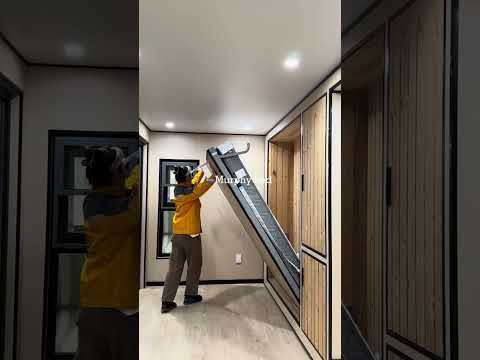
MagicSlide (expandable, ground-level, no loft) — our top recommendation for Florida ADU buyers. The single-story layout means no loft heat traps in Florida summers, the expandable footprint maximises the rentable square footage on a small lot, and the aluminium frame handles hurricane wind loads when properly anchored.
▶ Watch on YouTube — MagicSlide — Affordable Expandable Tiny House
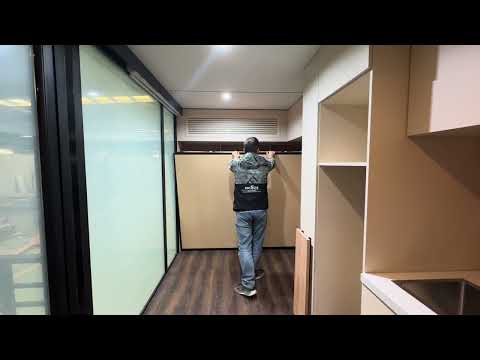
Magic Apple Cabin / MagicPod-Polar — the showcase pod for Airbnb investors and glamping resorts. The aerodynamic profile reduces wind load, the panoramic glazing (impact-rated upgrade available) sells the listing photos, and the compact footprint fits restrictive coastal setbacks. The MagicPod-Polar variant adds a heavier insulation envelope — the same R-values that lock cold out in Alaska also lock Florida heat out, slashing AC bills in Tampa and Orlando installations. See full specs across all our Magic Box models for Florida.
▶ Watch on YouTube — Magic Apple Cabin on Wheels
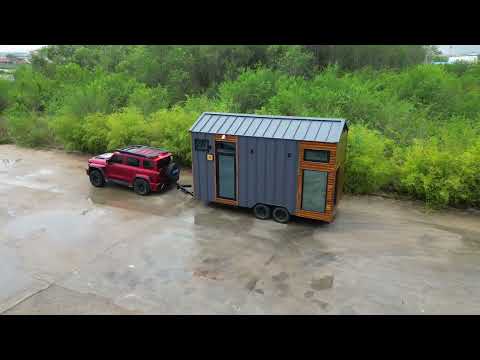
Magic-Nordic (classic gabled-roof THOW, ANSI A119.5) — for Florida buyers who want a traditional tiny house silhouette with the credentials to back it up. ANSI A119.5 certified, DOT-approved trailer for all 50 states, full queen loft, complete kitchen and bath, and 13 ft tall stays under most Florida road clearances. Starts at $45,000 factory-direct versus $90,000–$130,000 for US-built equivalents. See the Magic-Nordic 20ft for hurricane-zone deployments.
▶ Watch on YouTube — Magic-Nordic — Built to Last: 20ft All-Season THOW
If this is your first tiny home purchase, start with our buyer’s guide before sizing a Florida unit. It walks through certification, financing, and the questions to ask any builder before paying a deposit.
INVESTMENT
Airbnb Rental Potential in Florida
Florida is arguably the single best US state for tiny house Airbnb investment. The combination of 140+ million annual visitors, year-round warm weather, theme park demand, and beach tourism creates occupancy rates that simply don’t exist in seasonal markets.
Typical numbers for a properly placed, hurricane-rated Magic Box unit in Florida: $115–$165 average nightly rate (location-dependent), 60–75% occupancy in coastal markets, and gross annual revenue commonly in the $25,000–$42,000 range. Net of cleaning, platform fees, and insurance, Florida investors regularly report 12–18% cash-on-cash returns on a fully built and delivered unit. The math is broken down in our Florida Airbnb ROI potential deep-dive.
The two highest-yield zones today: the Florida Keys (Monroe County — strict but premium nightly rates) and the Gulf Coast islands (Sanibel, Captiva, Anna Maria). Inland near Disney, occupancy is more stable but nightly rates are 20–30% lower. We’ve helped buyers deploy in all three.
Magic Box operates a live tiny house Airbnb in Athens, Texas (different climate, same playbook). Our published earnings property shows the real numbers — not marketing projections — of what a properly placed tiny house can earn.
Common Questions About Tiny Houses in Florida
Are tiny houses legal in Florida?
Yes — but the rules are county-level, not statewide. Florida’s 2023 ADU law expanded statewide allowances, and Miami-Dade, Hillsborough, and Orange counties are particularly tiny-house-friendly. Broward and most municipal overlays are stricter. A tiny house on a permanent foundation is typically permitted as an ADU on R-1 lots; a THOW with ANSI A119.5 certification is permitted as an RV in most unincorporated areas. Always confirm with your county planning department before ordering, and check whether your specific city has overlay restrictions.
Can a tiny house survive a Florida hurricane?
Yes, if it’s built and anchored to Florida Building Code wind-load standards. Coastal Florida requires structures rated for 140 mph winds; the High-Velocity Hurricane Zone (Miami-Dade and Broward) demands 175 mph plus debris-impact-rated windows. Magic Box’s 6063 aluminium frame, combined with engineered ground anchoring and optional impact-rated glazing, meets these requirements. The single biggest failure point in most “hurricane-rated” tiny houses is anchoring — a great frame on cinder blocks will still fail.
Why is aluminium better than wood for a tiny house Florida buyers consider?
Three Florida-specific reasons. First, termites: Florida has both subterranean and aggressive Formosan termites that destroy wood frames. Aluminium is non-edible. Second, humidity: wood absorbs moisture, warps, and rots; aluminium does neither. Third, salt-air corrosion: aluminium forms a passive oxide layer that resists chloride attack, while steel fasteners in wood frames rust within years near the coast. Wood is cheaper to manufacture but costs 3–5x more in maintenance over a 20-year Florida lifecycle.
How much does a tiny house cost delivered to Florida?
Magic Box factory-direct pricing starts at $13,000 for the MagicNest panelised kit and runs to $55,000 for the two-bedroom MagicDuo, depending on model and hurricane upgrades. Delivery to a Florida port (Miami, Jacksonville, Tampa) is included in the price, along with import duty and customs clearance. Florida-specific upgrades — 175 mph wind rating, impact-rated windows, engineered anchoring — add roughly 10–18% to base pricing but cut insurance premiums significantly. Request a delivered quote with your county and ZIP for the exact number.
Building Tiny in Florida? Let’s Talk.
Whether you’re an Airbnb investor eyeing Sanibel, a retiree adding a backyard ADU in Tampa, or a first-time buyer in Orlando, we’ll spec a Florida-ready Magic Box to your county’s rules and your budget. Hurricane-rated, termite-proof, factory-direct.