The Complete Guide to
Prefab ADUs in 2026
Costs, zoning laws, permit steps, tiny house placement and permitting essentials, and the best prefab ADU models — everything you need to know about where to put a tiny house or ADU on your property this year.
The ADU revolution is here — and prefab construction is leading it. Across the United States, homeowners are discovering that adding an accessory dwelling unit to their backyard is one of the most financially intelligent moves available in today’s housing market.
Rents are high. Housing inventory is tight. And for the first time in decades, zoning laws in most US states actually allow it. But the traditional path to an ADU — hiring a general contractor, managing architects, navigating permits solo, waiting 18 months — is slow, expensive, and full of surprises. The average site-built ADU in California now costs over $180,000 before you break ground. Prefab changes that equation entirely.
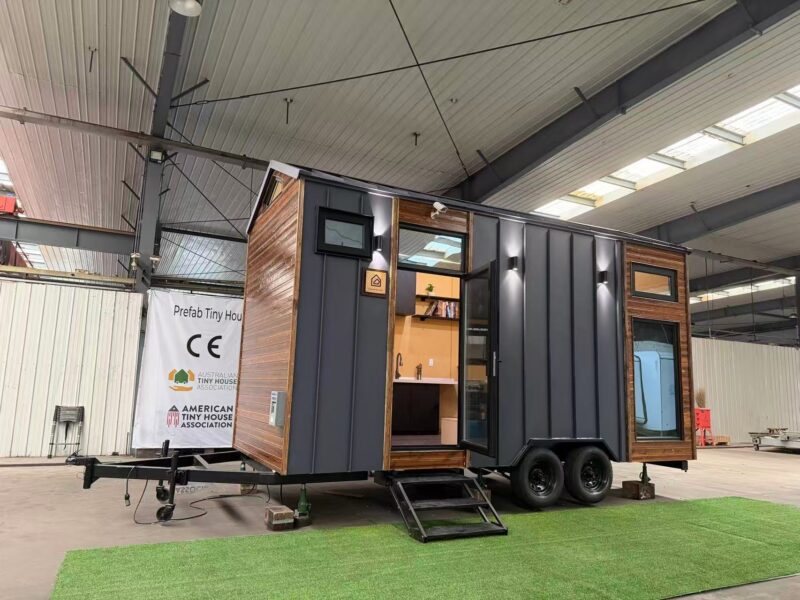
A factory-built ADU arrives at your property in weeks, not months. The construction cost is 50–70% lower than site-built. And manufacturers who specialize in ADU delivery — like Magic Box Tiny House — handle the complexity that used to require a team of consultants. This guide covers everything you need to make a confident, well-informed decision.
What Is a Prefab ADU — and Why Does It Matter?
An accessory dwelling unit (ADU) is a secondary residential unit built on the same parcel as a primary single-family or multi-family home. It has its own entrance, kitchen, bathroom, and sleeping area — making it fully self-contained and legally habitable as an independent residence.
A prefab ADU is simply an ADU manufactured in a controlled factory environment and then transported and installed on your property. The factory builds the structure, finishes the interior, installs plumbing and electrical, and delivers a unit that is days away from occupancy rather than months.
Factory-built alternatives start at $40,000–$65,000 for a complete, delivery-ready unit. The cost gap between site-built and prefab ADUs has never been wider — and the quality gap has largely closed as factory construction techniques have matured.
In 2020, roughly 8,900 ADU permits were issued across the US. By 2025, that number exceeded 55,000 — a six-fold increase driven almost entirely by changes to state zoning law and the emergence of factory-built alternatives that made the economics viable. The ADU regulatory landscape of 2026 is the most ADU-friendly in history.
ADU permit applications in the US grew 30% year-over-year in 2025. Factory-built ADUs now represent approximately 42% of all permitted ADU construction nationally — up from 17% in 2021.
The 5 Types of ADUs — Which One Is Right for You?
Not every ADU is the same. The type you choose determines your costs, timeline, permitting pathway, and property value impact.
1. Detached ADU (DADU)
A freestanding structure in the backyard, completely separate from the main home. This is the most popular type for prefab construction because it can be manufactured entirely off-site and placed on a prepared foundation. Detached ADUs offer the most privacy and command the highest rental rates. Most prefab ADU manufacturers — including Magic Box — specialize in this category.
2. Attached ADU
An addition connected to the main structure, sharing at least one wall with the primary residence. Harder to prefabricate fully because it must integrate with an existing structure. More common in dense urban parcels where backyard space is limited.
3. Junior ADU (JADU)
A conversion of existing space within the primary residence — most commonly a converted garage, basement, or large bedroom. Capped at 500 sq ft in most jurisdictions. The lowest-cost ADU option but also the most limited. Prefab doesn’t typically apply to JADUs.
4. Garage Conversion ADU
Converting an existing garage into a livable unit. This category has seen massive growth since California’s 2020 ADU law reform. Prefab interior kits — modular bathroom pods, kitchen modules — can dramatically reduce cost and timeline even when the structure already exists.
5. Manufactured Home ADU
A prefab or manufactured home placed on the property as an ADU. This is the category where factory-built tiny homes — like the Magic Box MagicNest and MagicSlide models — most directly apply. Both qualify as tiny houses on wheels (THOW) or fixed-foundation prefab ADUs depending on installation. All MagicBox tiny houses on wheels — including the MagicSlide and Apple Cabin — carry ANSI A119.5 certification verified through QAI, which satisfies the RV/park model classification requirement in most US jurisdictions. This certification simplifies placement permitting and enables financing and insurance that uncertified units can’t access.

Before choosing an ADU type, look up your parcel’s tiny house zoning and ADU zoning designation in your county’s online GIS portal. Many counties have adopted ADU-by-right zoning — but setback requirements, lot coverage limits, and height maximums vary significantly between zones. A 10-minute call to your local planning department can save months of wasted planning.
| ADU Type | Prefab-Friendly? | Typical Size | Cost Range | Best For |
|---|---|---|---|---|
| Detached ADU | ✓ Yes | 200–1,200 sq ft | $40K–$180K | Rental income, family housing |
| Attached ADU | Partial | 200–800 sq ft | $60K–$200K | Urban infill, small lots |
| Junior ADU (JADU) | No | Up to 500 sq ft | $20K–$80K | Budget-conscious homeowners |
| Garage Conversion | Partial | 200–600 sq ft | $25K–$100K | Existing structure reuse |
| Manufactured Home ADU | ✓ Yes | 150–800 sq ft | $35K–$150K | Fastest install, full customization |
How Much Does a Prefab ADU Cost in 2026?
The total cost of a prefab ADU has three components most buyers undercount: the unit itself, site preparation and foundation work, and permit and utility connection fees.
In some California cities, impact fees have historically exceeded $30,000 per unit. SB 9 and subsequent legislation have reduced or eliminated these fees on ADUs under 750 sq ft in most jurisdictions — but always verify your specific city’s fee schedule before committing to a budget.
A 2025 study of ADU construction costs across 12 US metro areas found that prefab ADUs cost an average of 53% less than comparable site-built units. Site-built ADUs routinely experience 20–35% cost overruns. Factory-built ADUs arrive with a fixed, predictable price.
ADU Laws & Zoning 2026 — State-by-State Overview
The regulatory landscape for ADUs has transformed dramatically since 2019. California led the charge with legislation that made ADUs by-right on any single-family parcel. Other states followed. Today, 38 states have ADU-friendly legislation in place at the state level.
— 2025 National ADU Policy Report, Urban Land Institute
Key Terms You Need to Know
- By-Right Approval: ADU is permitted automatically if it meets basic criteria — no discretionary review, no neighborhood hearings needed.
- Setback Requirements: Minimum distance between the ADU and property lines. Most states have reduced minimum setbacks to 4 feet for ADUs.
- Lot Coverage: Maximum percentage of the lot that can be covered by structures. ADUs typically count toward this.
- Owner-Occupancy Requirement: Requires the homeowner to live on-site. Many states have now eliminated this requirement.
- Height Limits: ADUs typically capped at 16 feet (single-story) or 25 feet (two-story).
- Impact Fees: One-time charges levied on new residential construction. Increasingly waived or reduced for ADUs under 750 sq ft.
- Deed Restrictions: HOA-governed communities may maintain private deed restrictions that prohibit ADUs even where local law allows them.
Minimum square footage requirements vary by jurisdiction, but most fall in the 200–400 sq ft range for ADUs. MagicBox’s expandable MagicSlide 2X expands to 460 sq ft — well above the 200–400 sq ft minimum that most jurisdictions require. Even the standard MagicSlide at 230 sq ft expanded meets the minimum in the majority of ADU-friendly counties. For broader comparisons across our lineup, see our affordable tiny house models and the 2025 cost guide.
Most ADU-Friendly States in 2026
Even in the most ADU-friendly states, private HOA deed restrictions can prohibit ADU construction. California AB 670 (2020) specifically voids HOA restrictions on ADU construction, but most other states haven’t taken this step. Always review your CC&Rs before planning an ADU on a HOA-governed property.
MagicBox ships factory-direct to all 50 US states. Our most popular placement states are California, Florida, and Texas. State-specific placement guidance — including local zoning quirks and best counties — is available in our tiny houses by location hub.
How to Get an ADU Permit: A Step-by-Step Guide
Poorly executed permitting strategies can add 3–6 months and thousands of dollars to a project. But the process is navigable if you approach it systematically.
For factory-built modular homes like MagicBox, the permitting process is typically faster because the unit arrives with a state-certified insignia confirming it was built to code in a licensed facility. This eliminates most of the on-site inspection stages required for stick-built construction — a significant advantage for both tiny house placement and tiny house permitting timelines, and applies equally to ADU permitting pathways.
- 1
Verify Your Parcel’s ADU Eligibility
Look up your parcel on your county’s GIS portal. Confirm your zoning designation and cross-reference with your local ADU ordinance. Check: is an ADU permitted by-right in your zone, what are the setback requirements, the maximum ADU size, and the lot coverage limit?
- 2
Commission a Site Survey and Soil Test
A licensed surveyor will mark your property boundaries, confirm existing structure setbacks, and identify utility easements. Budget $800–$2,500 for survey and soils work.
- 3
Select Your ADU Model and Obtain Factory Plans
Your prefab manufacturer should provide stamped architectural plans, engineering calculations, energy compliance reports, and foundation design specs. Ask specifically whether they have pre-approved plans in your city or county — this can cut review time from 8–12 weeks to 2–3 weeks.
- 4
Submit Permit Application to Building Department
Submit your application with all required documents: site plan, architectural plans, structural calculations, energy compliance report, soils report, proof of utility service, and permit fees. In jurisdictions with streamlined ADU legislation, the building department must issue a permit within 60 days of a complete application.
- 5
Complete Site Preparation During Plan Review
While your permit is under review (typically 4–8 weeks), prepare the site. Grading, utility trenching, and foundation work can often happen concurrently. Concrete slabs require 3–4 weeks for pour and cure. Helical piles can be done in 1–3 days.
- 6
Schedule Delivery and Installation
Once your permit issues, coordinate delivery with your manufacturer. Most prefab ADUs can be placed and set in 1–3 days. Confirm access road width (typically 12–14 feet minimum). After placement, utility connections are made and final interior work is completed.
- 7
Final Inspection and Certificate of Occupancy
The building inspector will verify code compliance, test utilities, and confirm the installation matches approved plans. Upon passing, you’ll receive a Certificate of Occupancy — the document that legally authorizes the ADU to be occupied and rented.
Best Prefab ADU Models of 2026
Choosing the right prefab ADU model depends on your intended use, your lot’s constraints, and your budget including delivery and site work.
Magic Box MagicNest — Best Overall ADU
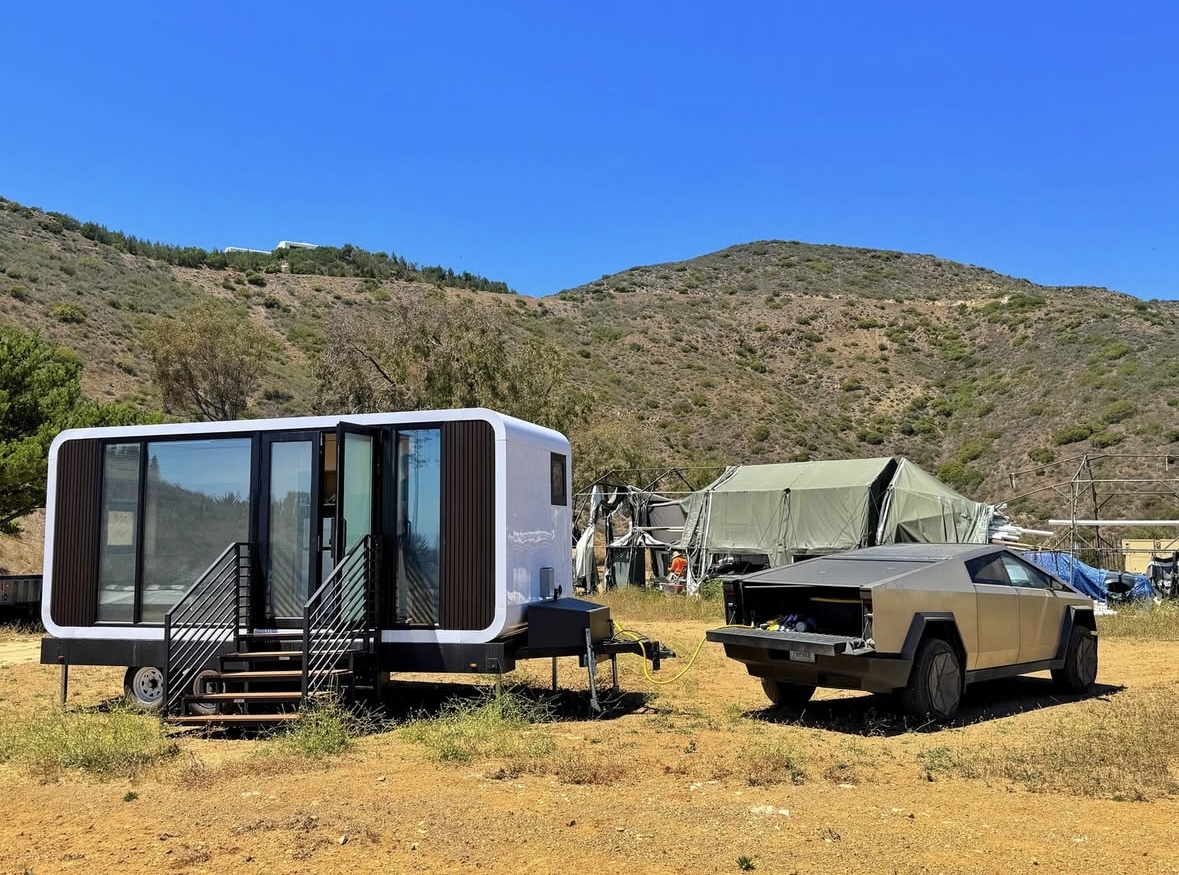
The MagicNest is the flagship single-level ADU model from Magic Box — purpose-built for backyard ADU applications with a footprint designed to meet common setback and lot coverage requirements in California, Texas, Florida, and most other ADU-friendly states. Its structural aluminum frame delivers exceptional strength-to-weight ratio, corrosion resistance, and a design aesthetic that complements existing residential architecture.
| Model | Size | Bedrooms | Best For | Starting Price |
|---|---|---|---|---|
| 🏆 Magic Box MagicNest | 320–480 sq ft | 1 bed / 1 bath | Rental ADU, guest house | From $45,000 |
| Magic Box MagicSlide | 400–640 sq ft | 1–2 bed / 1 bath | Long-term rental, family | From $55,000 |
| Mighty Small Homes Palo Alto | 462 sq ft | 1 bed / 1 bath | California ADU specialist | From $98,000 |
| Abodu One | 340 sq ft | Studio / 1 bath | Streamlined permitting focus | From $189,000 all-in |
| Villa Haus ADU | 500–750 sq ft | 1–2 bed / 1–2 bath | Premium rental, high-end markets | From $150,000 |
| ICON 3D-Printed ADU | 400 sq ft | Studio–1 bed | Design-forward, Austin TX | From $120,000 |
What to Look For in Any Prefab ADU Model
- Factory documentation package: stamped plans, engineering calcs, energy compliance report
- Delivery experience in your state — has the manufacturer permitted and delivered in your jurisdiction before?
- Foundation compatibility — does the manufacturer provide foundation design specs?
- Clear utility connection plans for water, sewer, electrical, and gas
- Warranty terms — what’s covered, for how long, and who handles warranty claims?
- References from buyers in comparable jurisdictions
- Insurance compatibility — does the unit qualify for standard homeowner’s insurance riders?
ADU Rental Income & ROI: What to Realistically Expect
In many US markets, a well-placed ADU can generate enough rental income to cover a meaningful portion of a mortgage payment, or produce net positive cash flow from day one.
— National Association of Realtors, ADU Impact Study 2025
Property Value Impact
Beyond rental income, ADUs consistently increase primary property values. A 2024 Zillow analysis found that properties with permitted ADUs in California sold for an average of 35% more than comparable non-ADU properties. In markets with severe housing shortages, the premium can exceed 50%.
Magic Box’s real-world Airbnb case study in Athens, TX demonstrates what’s achievable: a single prefab unit generating consistent rental income in a secondary market — illustrating how geographically broad the short-term rental opportunity has become.
Site Prep & Installation: What to Expect
Site preparation is the most variable cost in an ADU project — and the one most frequently underestimated. A flat, accessible lot can be prepared for under $10,000. A sloped, heavily landscaped hillside lot can require $30,000–$50,000 in grading, retaining walls, and utility trenching.
| Foundation Type | Cost Range | Timeline | Best For |
|---|---|---|---|
| Concrete Slab | $5,000–$15,000 | 3–4 weeks (pour + cure) | Most common; ideal for flat sites |
| Concrete Pier & Beam | $4,000–$10,000 | 1–2 weeks | Sloped sites; minimal grading needed |
| Helical Piles | $6,000–$14,000 | 1–3 days | Rocky soil, tight access, speed priority |
| Concrete Block / CMU | $4,000–$8,000 | 1–2 weeks | Rural/remote sites |
1Day 1
Placement
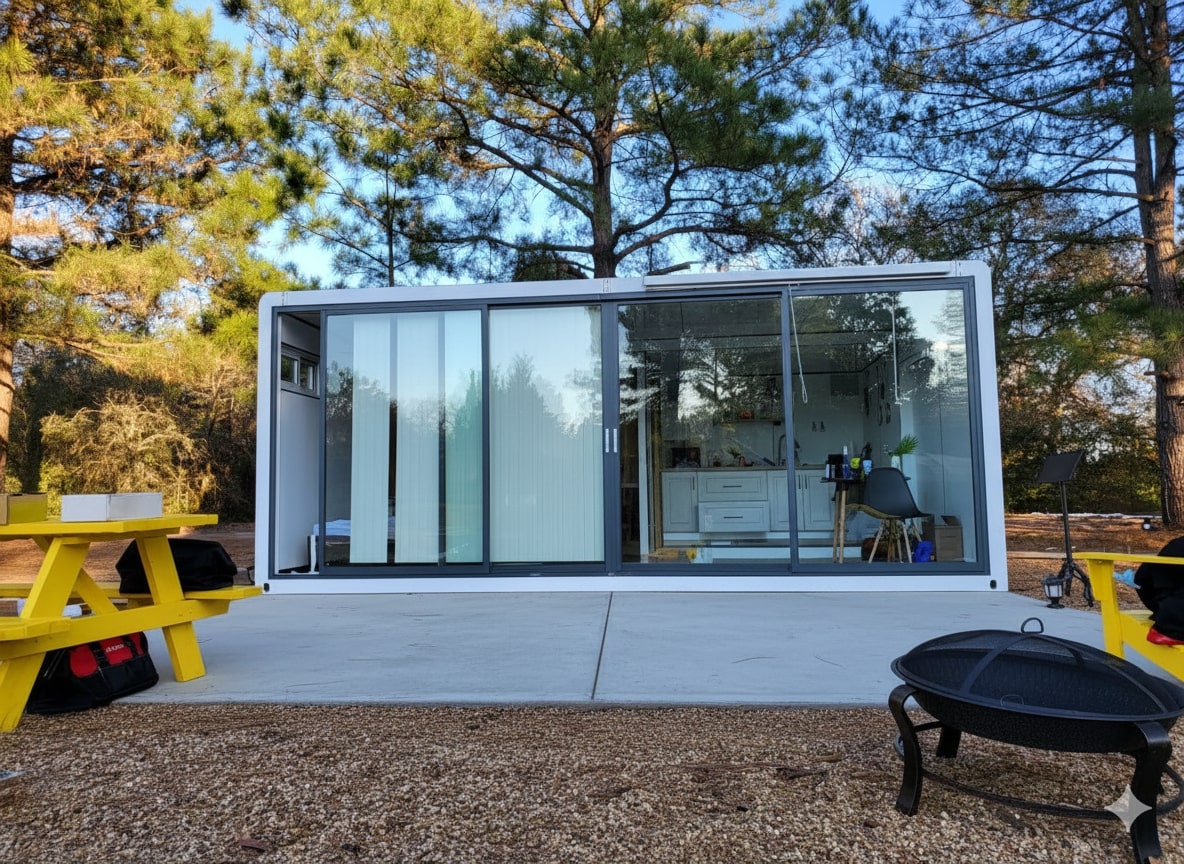
Crane or forklift placement of unit module(s) on prepared foundation. Structural connections made to foundation anchors. MagicBox units can be placed on concrete slabs, concrete piers, or helical anchors depending on your local code. Our site prep guide covers foundation options in detail.
2Days 1–2
Utility Connections
Electrical service connection, water supply tie-in, sewer or septic connection, gas line connection if applicable.
3Days 2–3
Exterior Finish
Skirting, siding connections, weatherproof sealing of utility penetrations, exterior trim.
4Days 3–5
Interior Punch-List
Fixture testing, appliance commissioning, finish touch-ups, door and window adjustments.
5Day 5+
Final Inspection & Certificate of Occupancy
Final inspection scheduled with building department. Certificate of Occupancy issued upon passing — your legal authorization to occupy and rent the unit. Coordinate your foundation timing carefully: concrete slabs require 28 days to cure, so start as soon as permits are issued. Helical piles can be installed in days and bear load immediately if your schedule is tight.
Prefab ADU vs. Site-Built ADU: The Full Comparison
The data firmly favors factory-built for most ADU applications. The clearest case for site-built is an unusual site where prefab delivery is genuinely impossible: extremely steep slopes, narrow access routes, or historic districts with strict architectural requirements.
| Factor | 🏭 Prefab ADU | 🔨 Site-Built ADU |
|---|---|---|
| Total Cost | $55K–$180K all-in | $120K–$350K all-in |
| Timeline | 3–6 months typical | 9–18 months typical |
| Cost Predictability | High — fixed price | Low — 20–35% overruns common |
| Design Flexibility | Pre-designed models with options | Fully custom from blank page |
| Quality Consistency | High — factory QC | Variable — site supervision dependent |
| Permitting Complexity | Reduced — pre-stamped plans available | Full — custom plan check required |
| Material Waste | 60% less vs. site-built | Standard construction waste |
| Best For | Most ADU buyers | Unusual sites, extreme customization |
The most common financing paths are a HELOC (Home Equity Line of Credit), a cash-out refinance, a construction-to-permanent loan, or a personal loan for smaller projects. California’s CalHFA ADU program offers low-interest loans up to $40,000 for qualifying homeowners. Fannie Mae’s HomeStyle Renovation loan can also be used for ADU construction.
Frequently Asked Questions About Prefab ADUs
Can I put a prefab tiny house on my property as an ADU?
In most US states, yes — a prefab tiny home can serve as a legal ADU if it meets your jurisdiction’s size and occupancy requirements. The key requirements are that the unit be permanently installed on a foundation, that it meet applicable building codes, and that it comply with setback, height, and lot coverage rules.
In California, manufactured homes and prefab units are explicitly allowed as ADUs in all residential zones. Texas, Oregon, Washington, Nevada, and Minnesota have similarly permissive stances. If your state or county is on the fence, ask your local planning department specifically whether manufactured homes or modular prefab units are permitted as ADUs in your zoning district.
How long does it take to build a prefab ADU from order to occupancy?
The all-in timeline from initial order to Certificate of Occupancy is typically 3–6 months. This breaks down roughly as: permit review (4–12 weeks), factory production (6–14 weeks, often concurrent), site preparation (2–6 weeks), installation (1–5 days), and final inspection scheduling (1–3 weeks). Working with a manufacturer who has pre-stamped plans for your jurisdiction can compress the total timeline significantly.
Do I need to live on the property to rent out an ADU?
Owner-occupancy requirements for ADU rentals have been largely eliminated across the US. California eliminated its owner-occupancy requirement in 2020 (AB 3182). Oregon, Washington, Minnesota, and Nevada have done the same. In these states, you can rent out an ADU on a property you do not personally occupy.
However, some jurisdictions retain owner-occupancy requirements specifically for short-term rentals (Airbnb, VRBO) while allowing long-term rentals without it. Always check your city’s specific short-term rental ordinance, which may differ from general ADU rules.
How much does an ADU add to my property value?
Permitted ADUs consistently add property value that exceeds the construction cost. A 2024 Zillow and Urban Land Institute analysis found that properties with permitted ADUs in high-demand markets sold for 25–50% more than comparable properties without ADUs. The value calculation is most favorable when the ADU is permitted, well-maintained, and generating documented rental income.
What is the minimum lot size for an ADU?
California eliminated minimum lot size requirements entirely in 2020. Oregon requires cities to allow ADUs on lots with at least one existing single-family home, regardless of lot size. Washington eliminated minimum lot sizes statewide in 2023. In states without state preemption, some municipalities maintain minimums of 5,000–8,000 sq ft. The more practical constraint in dense urban areas is often setback requirements and lot coverage limits, not minimum lot size itself.
Can I use an ADU for short-term rentals like Airbnb?
This depends entirely on your local short-term rental (STR) ordinance. Many cities require owner-occupancy for STR permits. Others require separate STR business licenses, limit rental nights per year, or prohibit STRs in residential zones entirely. Always check your specific city’s STR ordinance before designing your ADU rental strategy around short-term income. See our Airbnb ROI case study for real income data from an actual Magic Box unit.
How do I finance a prefab ADU?
The most accessible financing paths are: (1) HELOC — use existing home equity, typically the simplest path; (2) Cash-out refinance — refinance at a higher balance; (3) Construction-to-permanent loan; (4) Personal loan for projects under $75,000; (5) State ADU programs — California’s CalHFA offers low-interest loans to qualifying homeowners.
Credit unions often have more flexible ADU financing products than large banks. Fannie Mae’s HomeStyle Renovation loan allows financing of ADU construction as part of a primary home purchase or refinance.
What’s the difference between a prefab ADU and a modular ADU?
Both are factory-built, but they differ in construction method and regulatory classification. A modular ADU is built in modules in a factory, transported to the site, and assembled on a permanent foundation. Modular construction must meet the same IRC building codes as site-built homes and the unit is titled as real property — it qualifies for conventional mortgages.
A prefab ADU (in the broader sense) includes modular, but also panelized systems, manufactured homes (HUD-code), and purpose-built factory ADU units like the Magic Box MagicNest. Ask any manufacturer specifically which regulatory classification their units fall under — this is essential for financing and insurance purposes.
Ready to Add an ADU to Your Property?
Browse Magic Box’s prefab ADU models — factory-direct pricing, structural aluminum frames, ships to 60+ countries.
Explore ADU Models →
Commercial Projects