

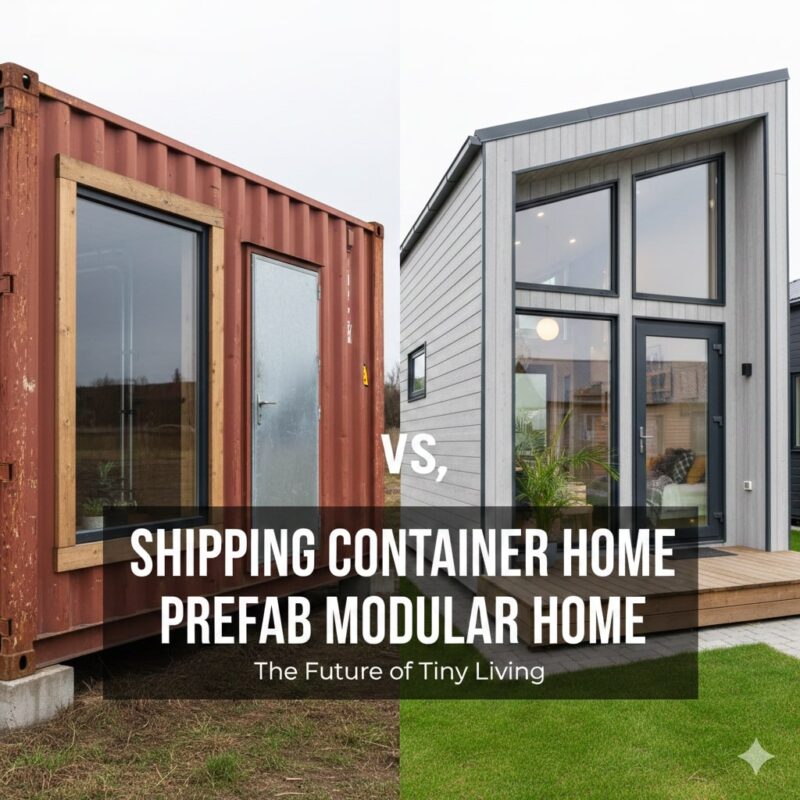
The Industrial Aesthetic vs. Living Comfort
Shipping container homes have dominated social media due to their rugged, industrial “upcycled” look. However, there is a significant difference between a structure designed to carry cargo and one designed to house people comfortably.
Insulation Challenges in Container Homes
One of the most overlooked aspects of a shipping container tiny house is thermal regulation. Steel is a highly conductive material. Without expert-level insulation, these units can become uncomfortably hot in summer and freezing in winter. Furthermore, adding thick insulation to the interior walls of a container—which is already narrow—significantly reduces your usable living space.
One of the biggest technical hurdles for a shipping container tiny house is thermal bridging. Because the entire structure is made of highly conductive steel, heat travels easily through the walls, making it extremely difficult to maintain a stable internal temperature. Without a professional thermal break, you may face persistent condensation and high energy bills.
In contrast, our prefab modular homes are engineered with built-in thermal breaks and high-performance sandwich panels. This ensures year-round comfort without sacrificing a single inch of your interior floor plan.
Scalability: Why Modular Prefab Offers More Flexibility
While you can stack containers, the process is labor-intensive. Every time you cut into the steel for a window or an open-concept layout, the structural integrity is compromised, requiring expensive steel reinforcements.
Modular container homes and purpose-built prefab units are designed on a modular grid. This means expanding your home or adding a tiny house on wheels module is much simpler and more cost-effective. They are built to be flexible from the blueprint stage, not modified as an afterthought.
Cost Analysis: Which Holds Value Better?
A common misconception is that a prefab container house is the “budget” option. While the initial cost of a used shipping shell is low, the “hidden costs”—such as rust treatment, specialized plumbing, and complex local building permits—can quickly exceed the price of a high-end prefab home.
Comparison Table: Container vs. Prefab Modular
| Feature | Shipping Container Home | Prefab Modular Home |
|---|---|---|
| Initial Cost | Low (for raw shell) | Moderate (turn-key) |
| Insulation | Difficult & Expensive | Built-in / High Efficiency |
| Approval/Permits | Complex (Non-standard) | Easier (Meets Residential Codes) |
| Durability | Requires Rust Maintenance | Corrosion Resistant & Long-lasting |
| Resale Value | Niche / Depreciation | High / Real Estate Asset |
When you look at long-term value, prefab modular homes tend to appreciate more like traditional real estate. Because they meet standard building codes more easily, they are simpler to finance and insure, making them a smarter investment for the tiny house community.

Frequently Asked Questions (FAQ)
Q1: Is it cheaper to build a shipping container home or buy a prefab tiny house?While a raw container is cheap, the cost of professional conversion (insulation, welding, permits) often makes it more expensive than a ready-to-move-in prefab modular home of the same quality.
Q2: How long do prefab modular homes last?Unlike repurposed shipping containers that may have rust issues, prefab modular homes from Magic Box are built with galvanized steel frames and weather-resistant cladding, designed to last 30-50 years with minimal maintenance.
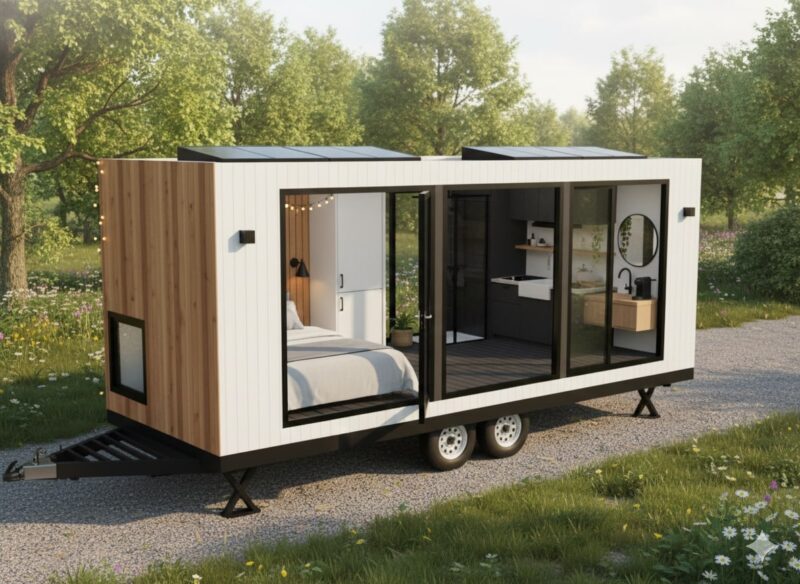
Q3: Can I put a prefab modular home on wheels?Yes! One of the biggest advantages of prefab design is its portability. We offer several tiny house on wheels options that combine mobility with the comfort of a standard home.
Conclusion: Making the Right Choice
If you are looking for a DIY project with a raw industrial look, a shipping container might suit you. However, for those who want a move-in-ready, energy-efficient, and scalable home, the prefab modular home is the clear winner.
Ready to start your journey? Explore our latest tiny house designs and find the model that fits your dream lifestyle.